Key Fob Skull – In the Hoop
First Impression: Bold, Playful, and Instantly Recognizable
As an embroidery designer who’s prepped over 200 craft fair booths—from Portland bazaars to Nashville maker markets—I’ll tell you straight: Key Fob Skull – In the Hoop lands with confident energy. It’s not cute-cute or gothic-gloomy. It’s bold, slightly cheeky, and refreshingly modern—like a vintage tattoo meets indie craft aesthetic. That “in the hoop” designation signals efficiency and polish, which matters when you’re stitching 47 items in 36 hours before Saturday morning setup. Customers scanning your table don’t pause for subtlety—they lock onto contrast, shape, and attitude. This design delivers all three.
Where It Shines on Craft Fair Products
In real-world booth testing, Key Fob Skull – In the Hoop performs strongest as a small-scale, high-impact accent—not a sprawling centerpiece. Here’s how it stacks up across your most common handmade products:
- Tote bag design: Perfect centered on the bottom corner of a natural canvas tote. Adds edge without overwhelming. Works especially well on unbleached or oat-colored fabric where thread contrast pops.
- Apron embroidery: Ideal above the pocket or along the waistband curve. Its compact shape adapts cleanly to gentle fabric drape—no distortion if hooped correctly.
- Tea towel embroidery: A standout on linen-cotton blends. Avoid heavy terry textures; opt for smooth, tightly woven towels where stitch definition holds.
- Embroidered patch: Excellent candidate for iron-on or sew-on patches. Clean outlines and balanced negative space make it easy to trim and finish professionally.
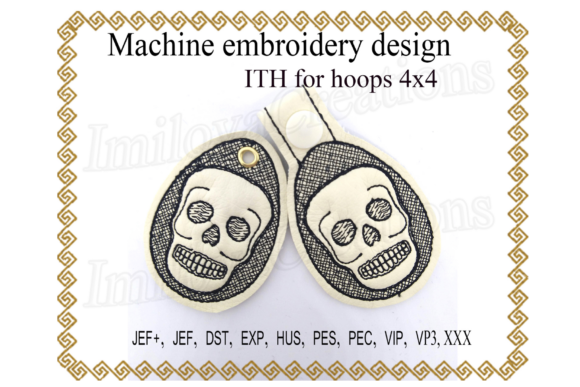
- Fabric pouch & key fob: Obviously the namesake use—and where it truly earns its keep. Stitched on vegan leather, cork, or medium-weight cotton twill, it reads as intentional, giftable, and boutique-worthy.
- Caps & curved surfaces: Proceed with caution. The skull’s symmetry helps, but avoid dense fill areas on structured caps unless you test stabilizer layers thoroughly.
- Pillow covers & market bags: Use sparingly—one per item, centered or corner-placed. Too many repeats dilute impact; one well-placed Key Fob Skull – In the Hoop elevates perceived value instantly.
What Makes It Sell—Beyond the Stitch
This isn’t just another machine embroidery design—it’s a conversation starter. At craft fairs, I’ve watched customers pick up a plain black key fob, turn it over, smile, and say, “Oh—this is *mine*.” That emotional hook is rare. It feels handmade without looking amateurish, edgy without alienating, and cohesive enough to support brand consistency across your line (think matching skull-embroidered tea towels + pouches + aprons).
For Etsy sellers and small shop owners, Key Fob Skull – In the Hoop photographs exceptionally well: crisp lines, strong silhouette, minimal background clutter. Pair it with neutral backdrops and natural light, and your printable mockup converts faster than hand-lettered quotes. As a digital embroidery file, it’s highly repeatable—no complex repositioning between runs, no alignment headaches during batch production. That means more units, less stress, and consistent quality across your craft fair inventory.
Careful-Use Notes Every Embroiderer Should Know
Don’t skip these practical checks—especially under time pressure:
- Dense stitch areas: The skull’s eye sockets and jawline often carry heavier fill. On thick fabric or textured tea towels, this can cause puckering. Always pair with cutaway or tear-away plus topping for clean definition.
- Tiny details: If the design includes fine teeth or subtle shading, verify clarity at 2.5"–3" width—the sweet spot for key fobs and patches. Anything smaller risks blurring.
- Dark fabric: Test thread colors against charcoal, navy, or black bases. Metallic or high-sheen threads add dimension; matte poly works best for rustic cohesion.
- Hoop size & spacing: Confirm the required hoop size before cutting fabric—some versions demand 4x4, others fit snugly in 3.5x3.5. Tight spacing between elements? Double-check that your machine doesn’t skip stitches on tight curves.
- Fabric texture mismatch: Skip terry cloth, bouclé, or heavily brushed fleece. Stick to medium-weight cotton, linen, twill, or coated canvas for reliable results.
Designer-to-Designer Production Checklist
Before committing to 50+ units, run this quick validation:
- Test the Key Fob Skull – In the Hoop embroidery file on scrap fabric matching your final product—same weight, same dye lot.
- Check thread contrast in daylight AND booth lighting (LEDs love cool tones; incandescents flatter warm ones).
- Review spacing and stitch density visually—not just on screen. Zoom in. Look for thread nests or floating stitches.
- Confirm hoop size compatibility with your machine model and frame system.
- Use appropriate stabilizer: cutaway for stretchy fabrics, tear-away for stable wovens, plus water-soluble topping for texture control.
- Create at least one real mockup—not just a digital preview. Hold it. Dangle it. See how it moves and catches light.
- Compare fabric color options side-by-side: ivory vs. oat vs. charcoal changes mood dramatically.
- Verify commercial licensing terms before selling finished products—this is non-negotiable for Etsy sellers and wholesale partners.
Final Thought: A Smart Addition to Your Sewing & Embroidery Line
Key Fob Skull – In the Hoop isn’t filler. It’s a focused, versatile, and commercially savvy machine embroidery design that strengthens your booth presence, supports your brand voice, and converts browsers into buyers. For craft fair sellers juggling time, texture, and visual fatigue, it’s the kind of small-but-mighty design that punches above its size—elevating tote bags, anchoring apron collections, and turning simple key fobs into signature handmade products. When executed well, it doesn’t just sell—it tells your story: skilled, intentional, and unapologetically human-made.